
by someone who’s trying to stay honest
Friday Night, two weeks ago
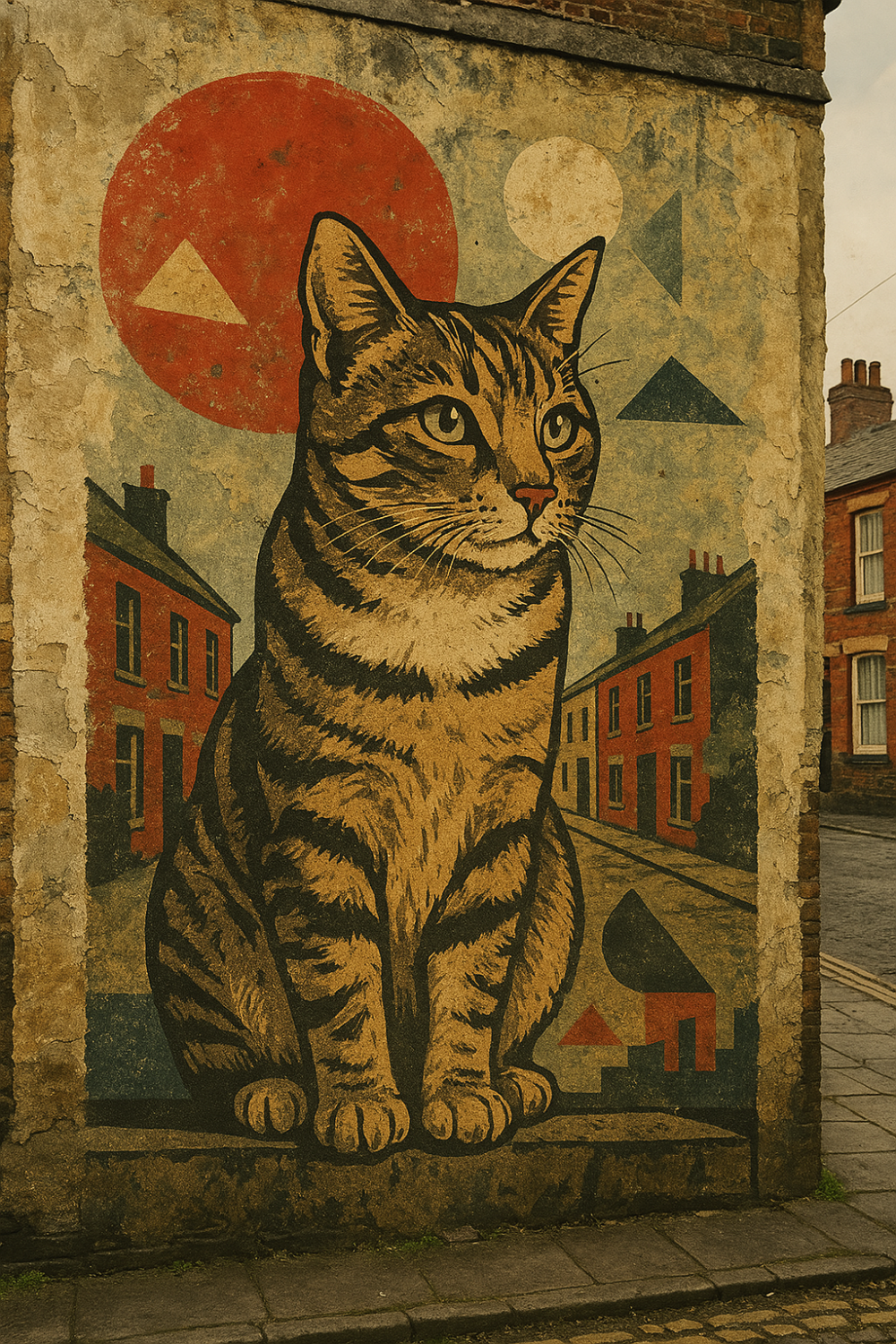
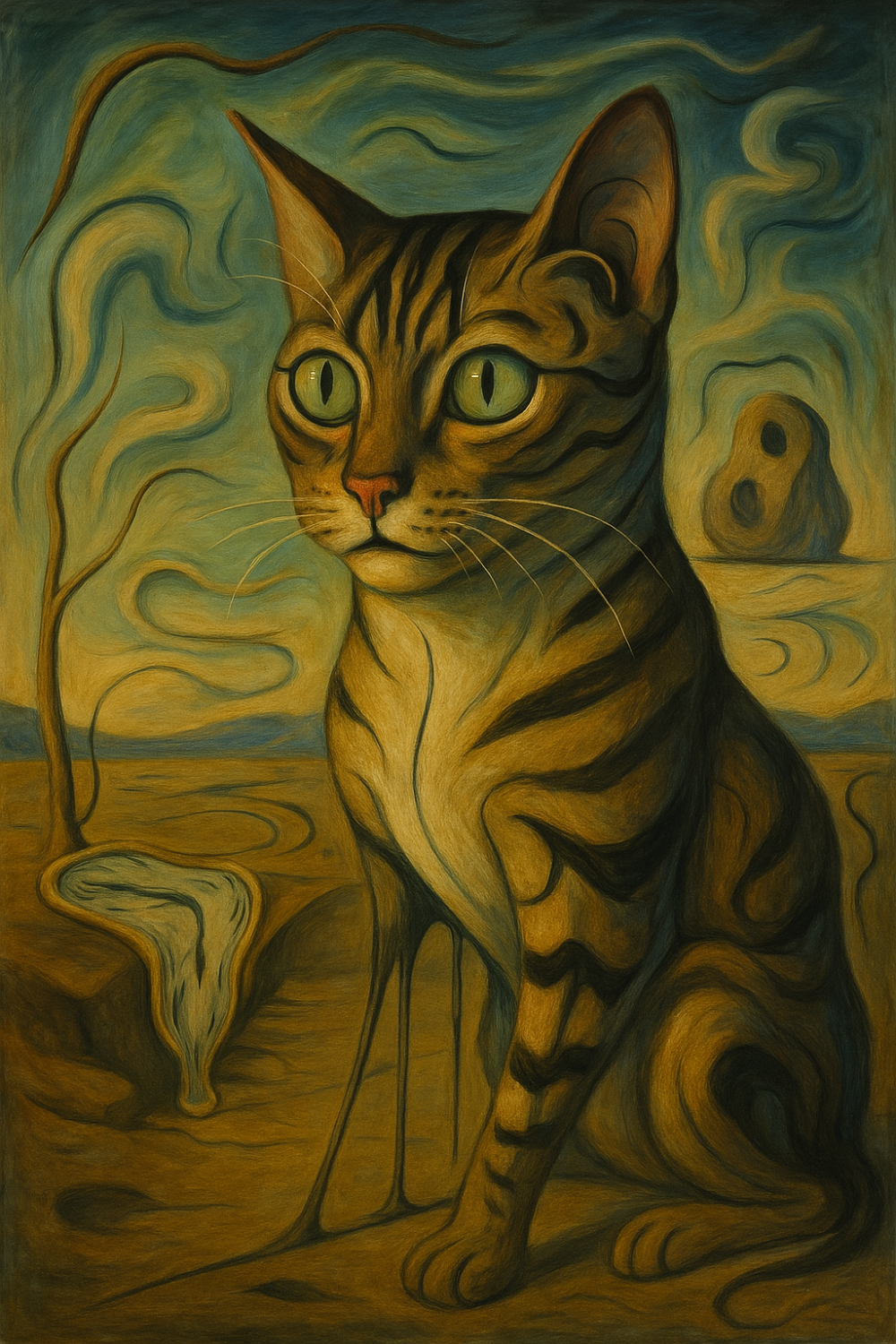
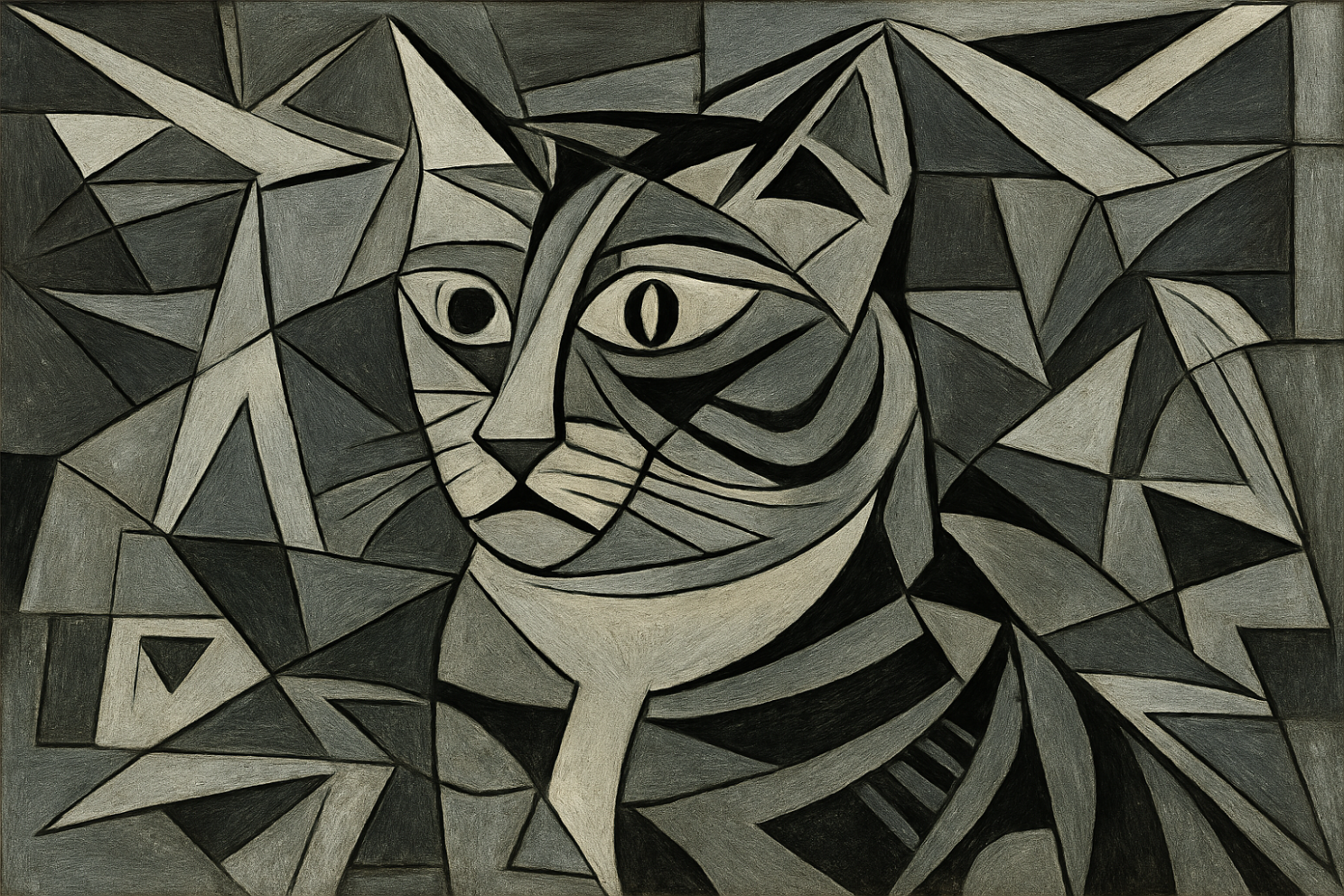
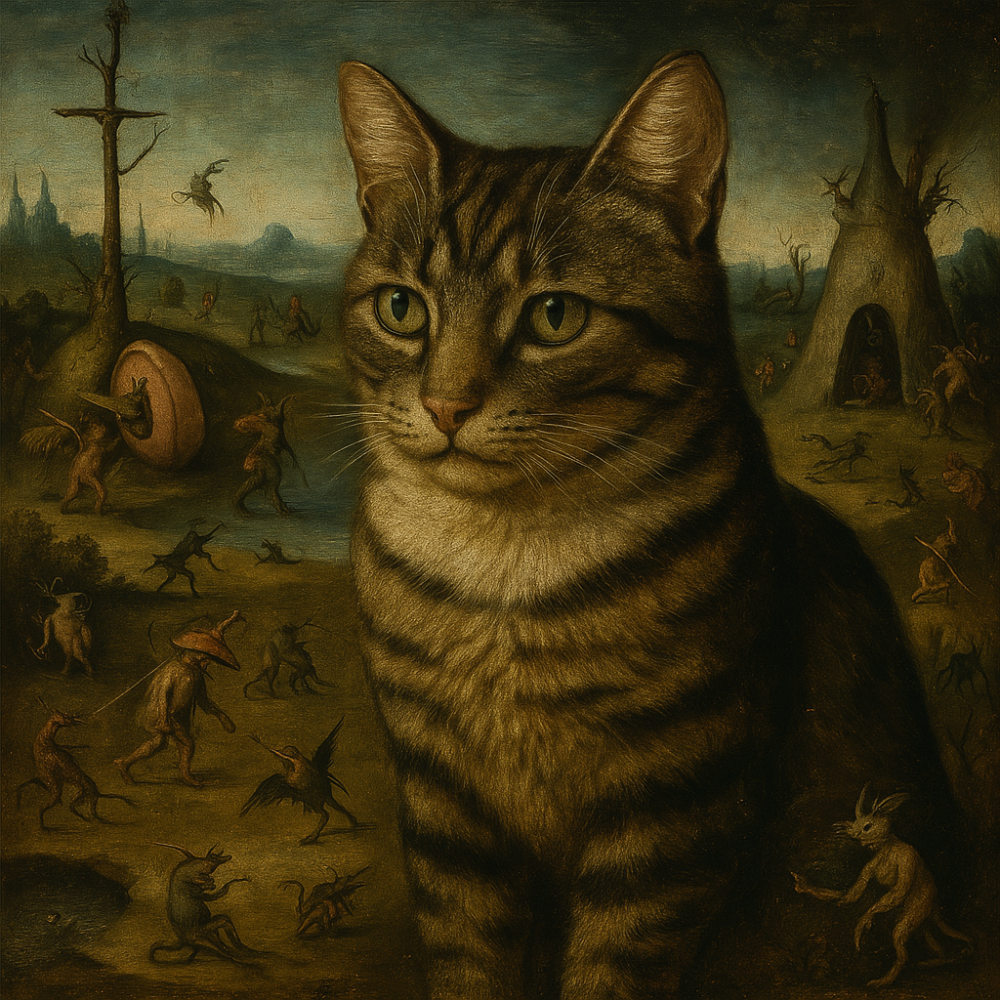
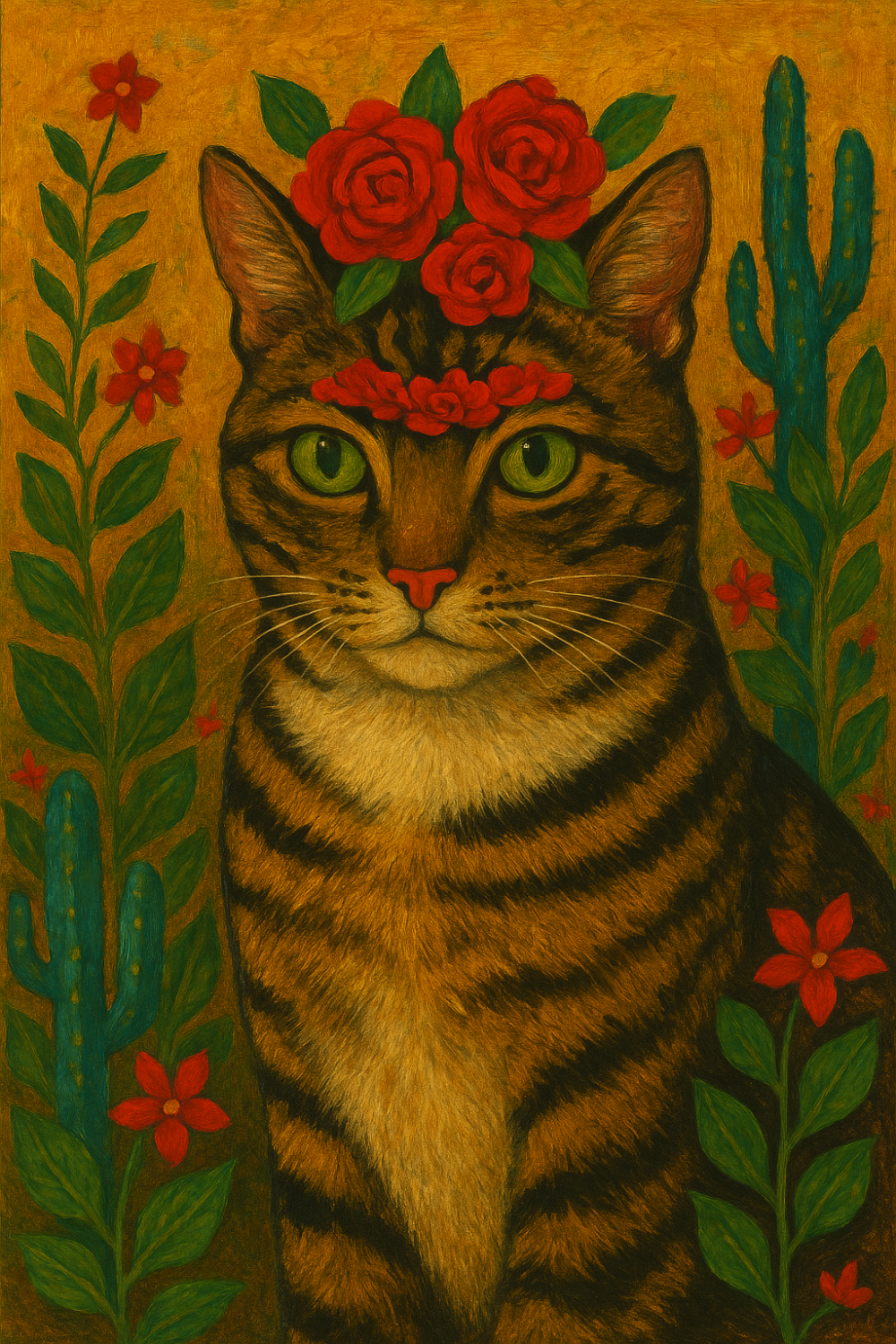
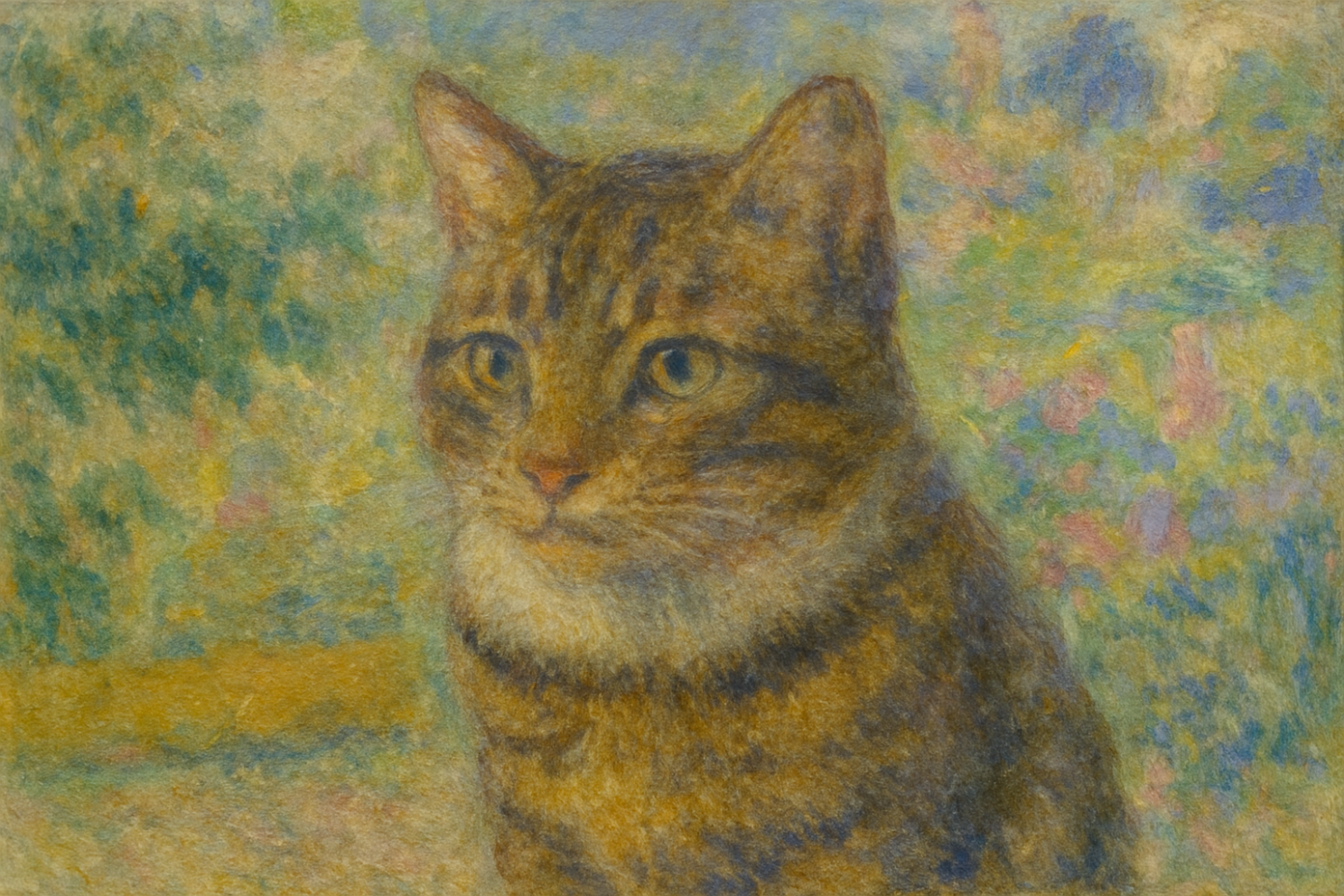
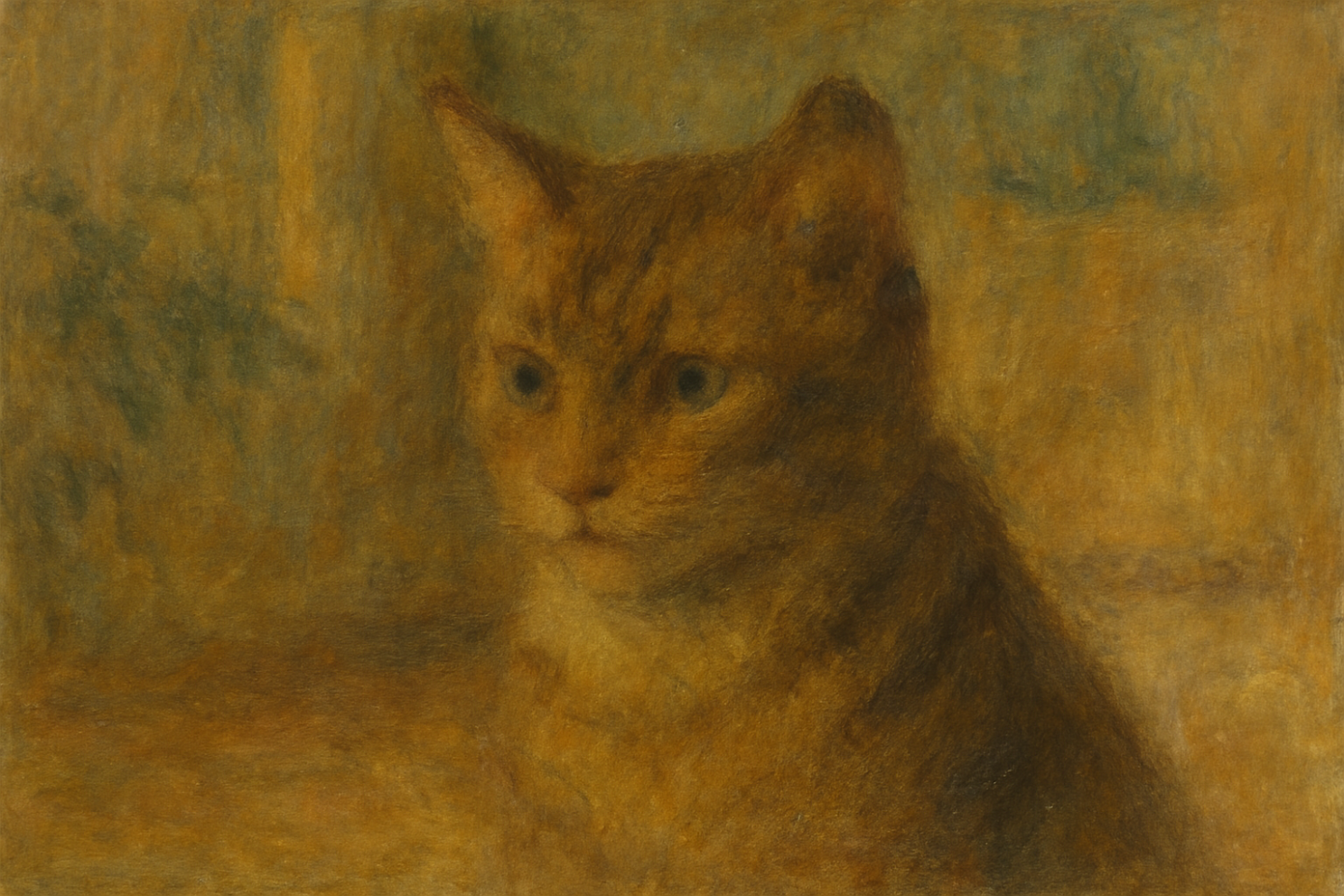
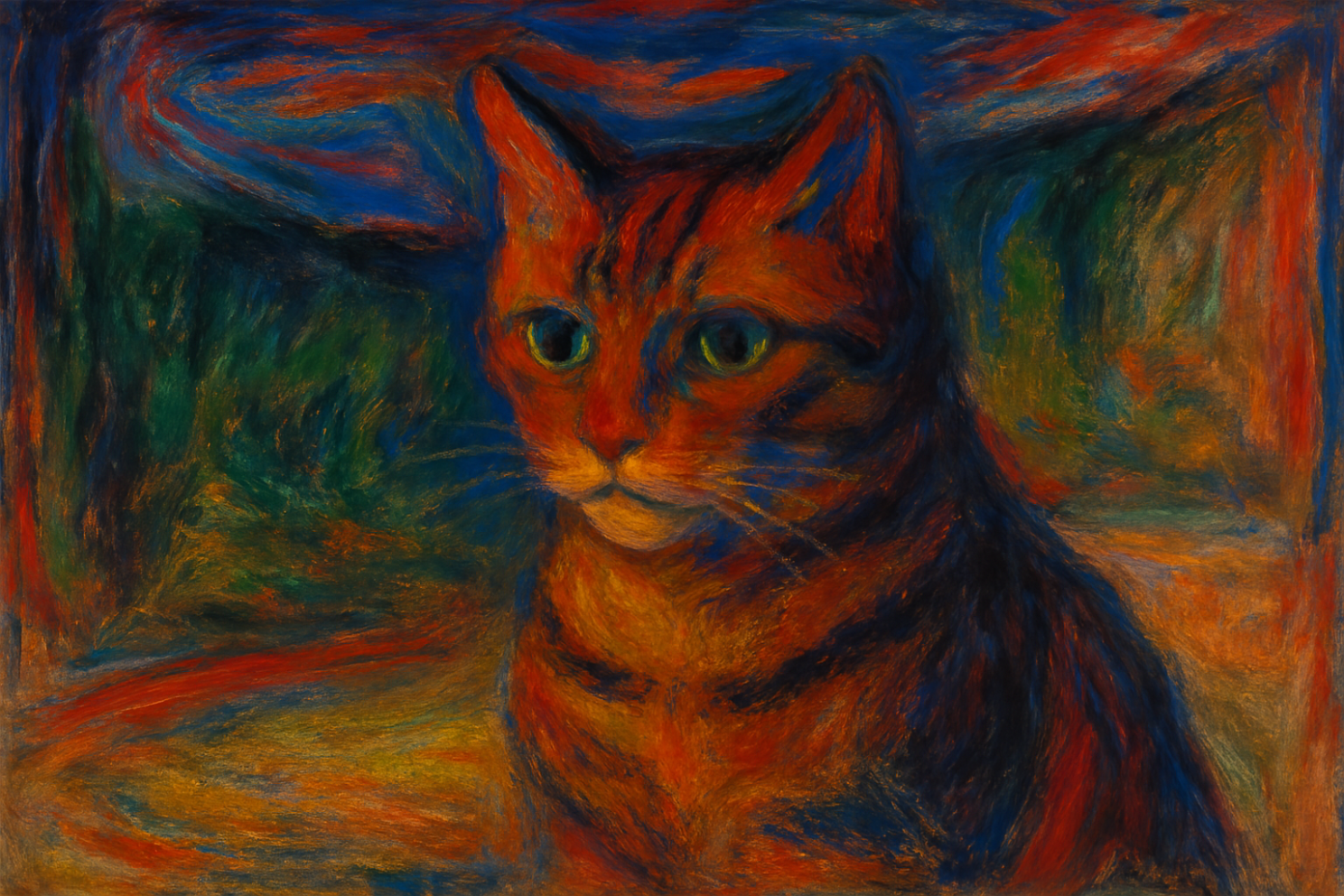
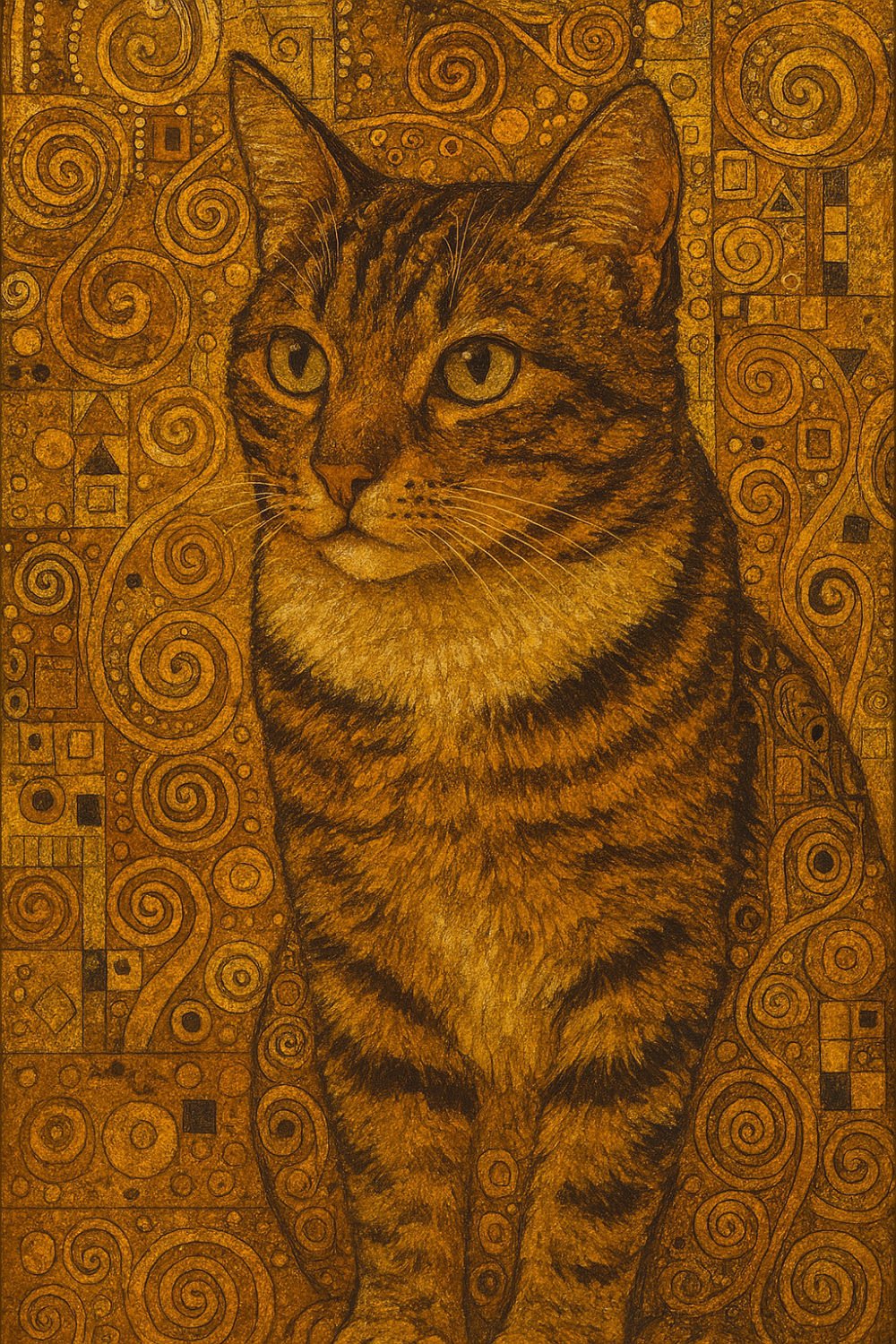
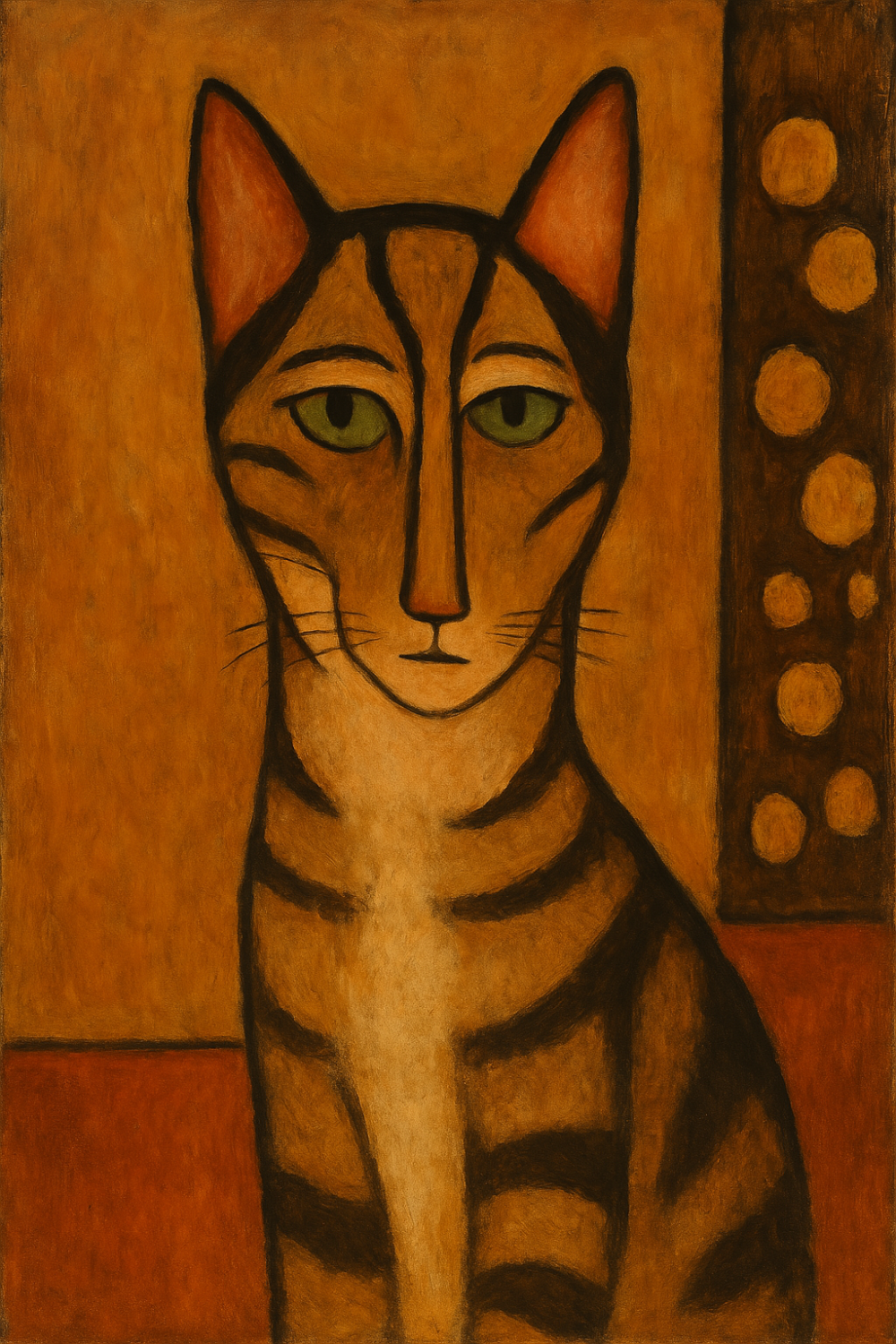
A few days after the release of the new ChatGPT image generator on 25 March, I spent that Friday night generating dozens of images of Tabby, our pet cat.
Some were funny. Some were surprisingly beautiful. A few were just weird enough to make me laugh out loud. It was late, I was tired, and it felt like harmless play.
And then, of course, I remembered the energy.
Remembered that every one of those images has a cost—somewhere, on someone’s GPU farm, a cooling system is drawing power, water is being used, carbon is being emitted. All so I could amuse myself with a Picasso/Leonardo/Ghibli cat.
This isn’t a confession, exactly. But it is a noticing. A tension.
Trying to live lightly
I care about the climate. I’ve made changes—some small, some more structural. I haven’t flown since 2022. We’ve got solar panels and a home battery. I drive an electric car. I work remotely. I use green energy (yes, I know it’s complicated). I eat differently. I talk to my kids about degrowth and planetary boundaries. I try to pay attention.
None of this makes me virtuous. It just means I’ve chosen to live with the awareness that this stuff matters. That I want my actions to line up—roughly, imperfectly—with my values.
Which is why the AI image generator is uncomfortable. Not in theory. In use. In the actual moment of clicking “generate” again, knowing—knowing—that this thing I’m doing, this tiny delight, has a real cost.
This isn’t a tool, it’s a toy

That’s the heart of it, really. I’m not using this to make anything essential. I’m not earning a living with it. I’m not solving a problem or sparking a movement. I’m just playing. I type in a prompt, hit generate, and get a little shot of creative pleasure. Instant feedback. Sometimes joy.
And that’s what makes it tricky. Because the joy is real. The emissions are real. The ethical discomfort is real. And they’re all happening at once.
What it actually costs
These tools aren’t magic. They run on infrastructure—GPU clusters, data centres, enormous training sets. Training a model like this once can emit more carbon than the average person does in a year. Even individual prompts carry weight. One image might use about as much energy as boiling a kettle.
That doesn’t sound dramatic until you remember how easy it is to generate twenty images without thinking. Or fifty. Or, if it’s late and you’re tired and you’re on a roll… well.
It adds up. Not to planetary disaster on its own, but to the kind of ambient background harm we forget to count.

More than carbon
And it’s not just the emissions.
These tools are built on data—massive, scraped, unlicensed datasets of other people’s work. Artists, photographers, illustrators, designers. People who used to be paid for making images. Now their style can be mimicked in seconds by people like me, for free. For fun.
There’s a discomfort there too. I’m not sure who I’m stealing from when I prompt “Ghibli-style tabby in a field of stars,” but someone taught the model to make it. Someone’s creative DNA is in there, whether they agreed to it or not.
And again, I still clicked.
So what now?
I don’t have a solution. I’m not writing this to declare an intention to quit, or to tell anyone else what to do.
But I am trying to stay awake. To notice what I’m doing. To ask questions I might rather ignore.
Sometimes that means tracking my usage. Sometimes it means choosing not to open the generator when I’m just bored. Sometimes it means asking: Is this prompt worth the energy? Not in some grand, performative way—just quietly, as a check-in.
And sometimes, it means writing things like this. Not to draw a line under the contradiction, but to name it out loud.
Where the hope is
The hope, for me, isn’t in pretending this stuff is clean. Or that I’m consistent. Or that we’ll engineer our way out of ecological collapse with clever prompts and solar panels.
The hope is in staying in relationship—with consequence, with complexity, with my own behaviour. The hope is in not numbing out. In letting discomfort be useful. In not needing every joy to be innocent in order to still care.
Maybe that’s what integrity looks like now. Not purity, but attention. Not perfection, but refusal to stop noticing.
Appendix: What does it cost to click?
Just for context, here are some rough estimates of energy and emissions. These aren’t perfect, but they give a sense of proportion.
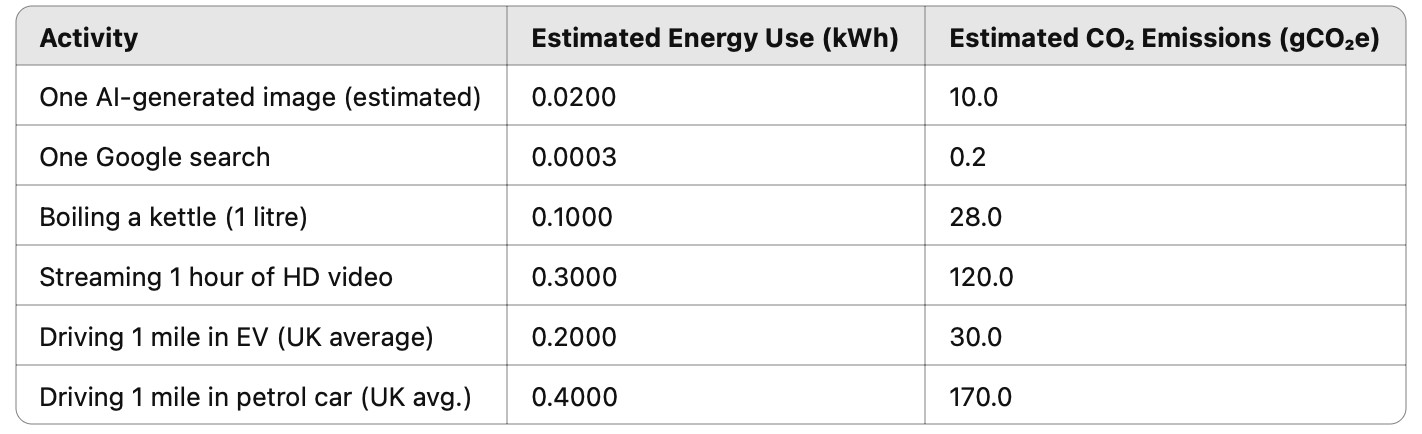
So—one image is about a third of a kettle-boil. Or a third of a mile in an EV. Not catastrophic. But not nothing. Especially when it’s late, and you’re tired, and the cat still looks great in when she’s painted by Picasso.